


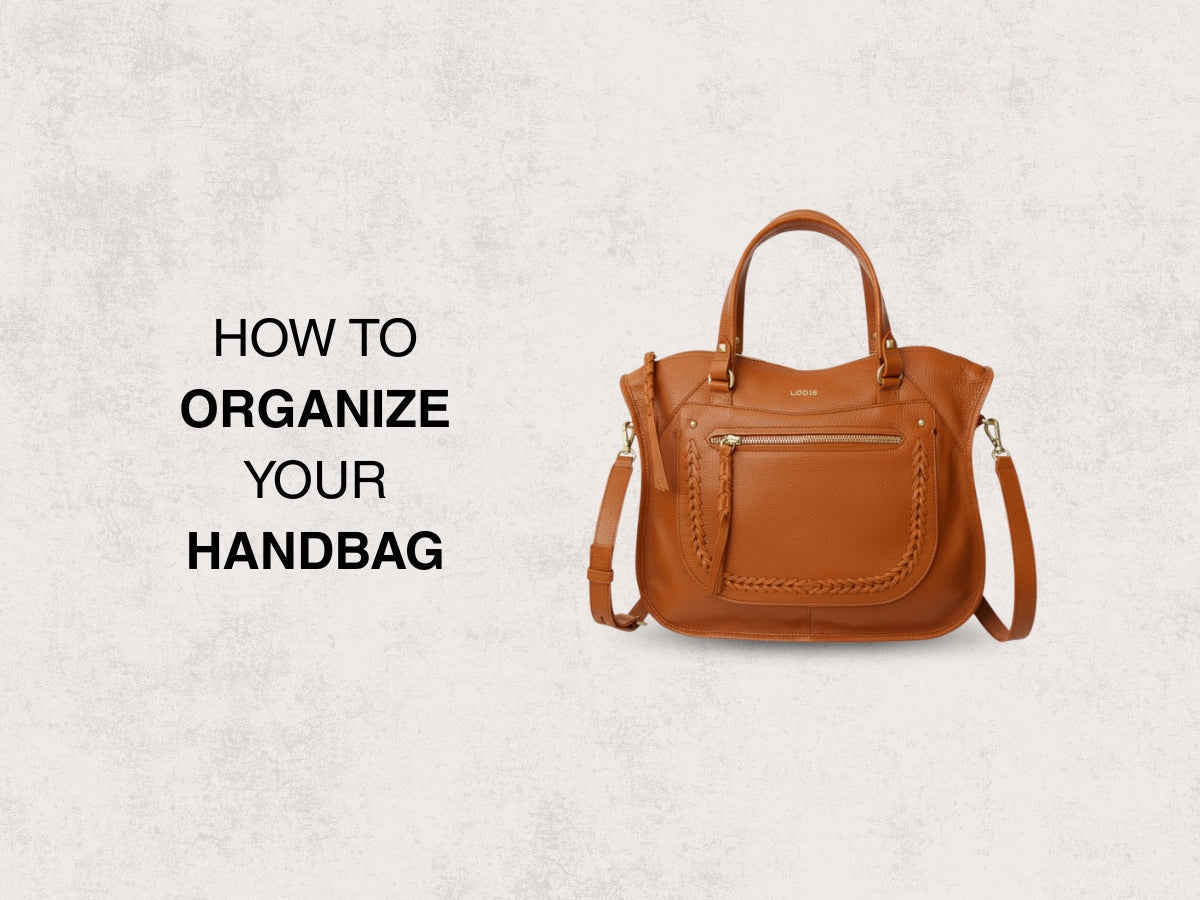
How To Organize Your Handbag: Tips For A Clutter-Free Carry
Handbag organization starts with decluttering: remove everything, sort what you actually use, then assign each item a specific pocket or pouch. Repeat a quick reset weekly to keep it that way.
Here's what happens in reality. Nothing gets thrown out on purpose; it just sort of stays. A lipstick rolling around loose, a charger tangled at the bottom, or an earbud case that somehow ends up under everything else. None of it seems like a big deal on its own, but add it up and suddenly you're digging through your whole bag just to find your phone. And research shows roughly a third of women spend at least five minutes every day digging through their handbag just to find something.
The fix is simpler than it sounds. Once every item has its own spot, a pocket for cards, a slip pocket for your phone, and a small pouch for chargers or makeup, the clutter mostly stops happening in the first place. It's less about owning less and more about giving what you carry some actual structure. Here's a straightforward way to get there, so you spend less time searching and more time just using what's in your bag.
Why Does Your Handbag Get Cluttered So Fast?
Clutter rarely happens all at once. It builds slowly: a receipt here, a loyalty card there, an item you meant to put back but never did. A charger left in from last week. A snack wrapper that's been riding along longer than you'd like to admit.
None of it seems worth fixing on its own. That's exactly the problem. Small, harmless additions stack up fast, and before long you're carrying weight and volume you never actually chose. The real issue isn't what you're carrying. It's that nothing has a specific place to go. Once every item has a home, the clutter mostly stops coming back on its own. Here’s how you can start.
1. Empty It Out & Keep Only The Essentials
Start by dumping everything out onto a flat surface. Seeing it all at once, rather than digging piece by piece, makes it much easier to spot what you actually use versus what's just been riding along.
Sort into a few quick piles: things you reach for daily, things you rarely touch, obvious trash, and items that belong somewhere else entirely. Most people are surprised at how much falls into the "rarely touch" or "trash" pile.
From there, keep only what earns its spot:
- Wallet
- Phone
- Keys
- Sunglasses
- Lip balm or hand sanitizer
- Tissues
- A small notebook or pen
- A reusable shopping bag, if you tend to need one
If you haven't used something in the last few weeks, it probably doesn't need to live in your bag full time. For a closer look at what's actually worth carrying, this blog breaks it down further.
2. Give Every Item A Home
Once you've trimmed down to essentials, the next step is giving each one a specific place to live. Random placement is exactly how clutter creeps back in.
Start with your interior zip pocket, ideal for cards, cash, or anything you'd hate to lose. Slip pockets are best for things you reach for constantly, like your phone or sunglasses, since they stay accessible without getting buried. Your main compartment can hold your wallet and a cosmetic pouch, while a small separate pouch works well for chargers, medication, or earbuds.
A few small habits make a bigger difference than expected. Keep heavier items like water bottles or books toward the bottom, so they don't crush what's on top. Keep anything valuable zipped rather than sitting loose in an open pocket. And resist the urge to overstuff any single compartment; it makes finding things slower, not easier.
Grouping similar items into small pouches (one for beauty essentials, one for tech accessories, one for medications) takes this a step further, keeping your bag's interior clean and making it easy to grab everything at once if you switch bags.

3. Build A Weekly Reset Habit
Organizing your bag once isn't enough; clutter creeps back in unless you catch it early. That's where a weekly reset comes in.
It doesn't need to take long. Five minutes is plenty: clear out receipts, throw away anything that's trash, top off tissues, and charge your power bank if you use one. Put back anything that snuck in from somewhere else.
It's basically the bag equivalent of clearing your desktop before Monday. Small habit, but it keeps things from spiraling.
Common Mistakes That Make Your Bag Messier
Even with a good system, a few habits sneak clutter back in:
- Keeping "just in case" items
If it's been sitting untouched for weeks, it's probably not earning its spot - Too many loyalty cards
Trim it down to the ones you actually use regularly - Loose makeup rolling around
A small pouch keeps things contained and protects your bag's lining - No dedicated key spot
Keys without a home are almost always the hardest thing to find - Coins everywhere
A small pouch or zip pocket solves this instantly - Skipping resets
Even the best organizing system needs regular upkeep to stick.
Choosing A Handbag That Helps You Stay Organized
Part of staying organized comes down to the bag itself. A bag with one big compartment and no internal structure makes clutter almost inevitable, since there's nowhere for anything to actually belong.
When shopping for a new one, prioritize multiple compartments, secure zip pockets, a structured shape, and a durable lining that won't wear down quickly. A quick-access exterior pocket and a size that matches how much you actually carry both make a real difference day to day.
Structured totes like the Priscilla Tote and satchels like the Margo Satchel and Ellie Satchel are built with exactly this kind of layout in mind, offering dedicated compartments and secure pockets that make staying organized much easier. Choosing a bag built with functionality in mind can reduce everyday clutter without asking you to sacrifice style.

Once you've got a bag that stays organized, keeping the leather itself in good shape matters too. Check out our guide to leather bag care for tips on cleaning, protecting, and storing your bag properly.
In the end, staying organized isn't really about carrying less; it's about carrying smarter. A handbag that works for you instead of against you comes down to habits, but also to the bag itself doing part of the work. When the two line up, staying organized stops feeling like a chore and starts feeling automatic.
That's where the right design matters. Lodis has been designing leather totes and satchels since 1965, and that kind of experience shows in how thoughtfully the compartments and pockets are built into each bag, not added as an afterthought. A bag built with intention makes it easier to stick with good habits over time.
The best handbag is the one that fits your life and helps you stay effortlessly organized while doing it, without asking you to think twice.
Frequently Asked Questions
Q1. What's the best way to organize a handbag?
Start by emptying it out completely, then keep only what you actually use day to day. Give each item its own spot, a pocket for cards, a pouch for chargers, and reset things weekly so clutter doesn't sneak back in.
Q2. How often should I clean out my handbag?
A quick five-minute check once a week keeps things from piling up. Beyond that, doing a deeper clean once a month, wiping the interior and double-checking every pocket, helps catch things a weekly reset might miss.
Q3. What should I always carry in my handbag?
Most people need their wallet, phone, keys, and something small like lip balm or hand sanitizer. Beyond that, it really depends on your day. Your essentials should match your actual routine, not someone else's bag tour.
Q4. Why does my handbag get messy so quickly?
It's rarely one thing. A receipt here, a loose coin there, an item you meant to put back but didn't. None of it seems like a big deal in the moment, but it adds up fast without you noticing.
Q5. What's the best handbag for staying organized?
Look for one with multiple compartments, secure zip pockets, and a shape that holds up on its own. A bag with built-in structure, rather than one open space, does a lot of the organizing work for you.


Leave a comment
This site is protected by hCaptcha and the hCaptcha Privacy Policy and Terms of Service apply.