


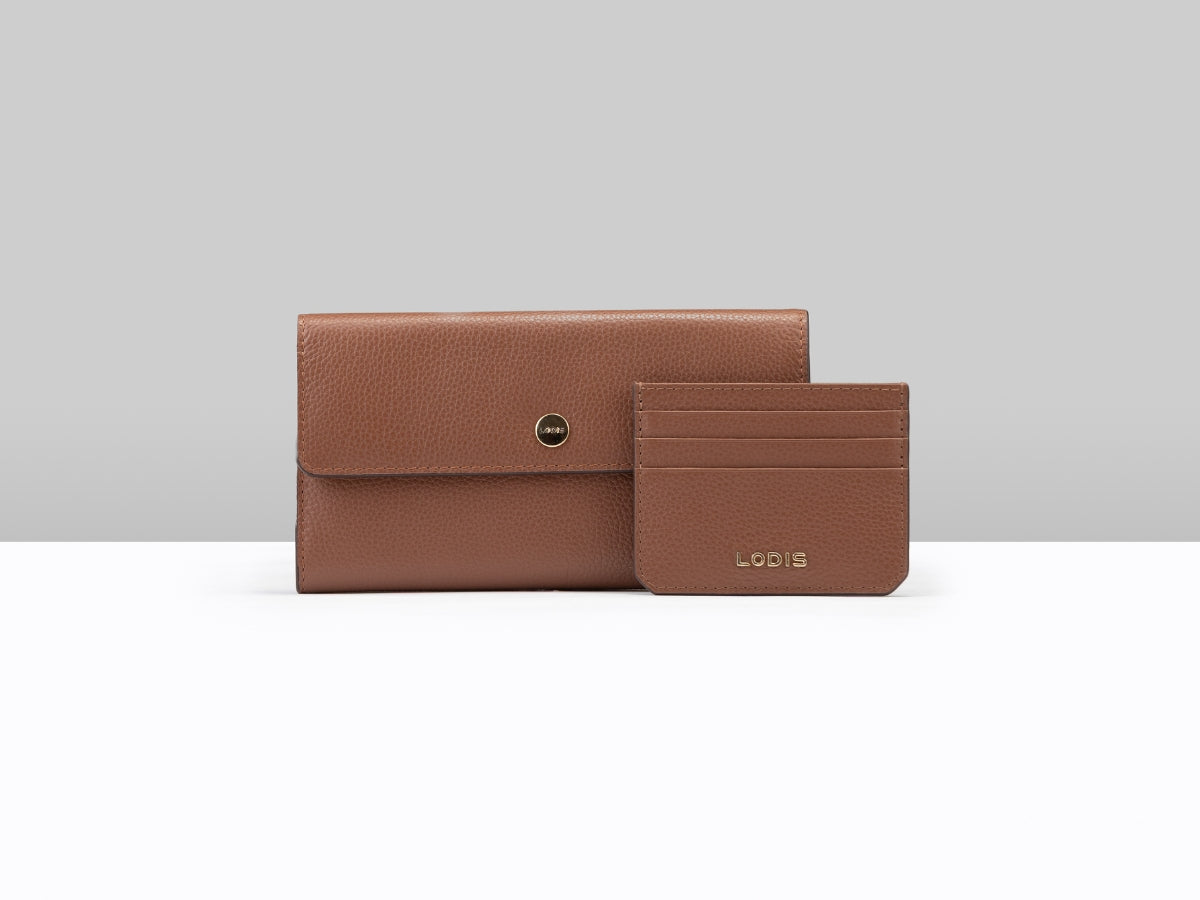
How To Care For A Leather Wallet So It Lasts For Years
To care for a leather wallet, keep it out of direct moisture and sunlight, avoid overstuffing it with cards and receipts, wipe it down regularly with a dry microfiber cloth, and condition it every few months. Store it in a dust bag when not in use to help it hold its shape and finish over time.
A leather wallet is one of the most-used accessories in a woman's everyday carry and also one of the most overlooked when it comes to upkeep.
A woman's wallet is opened and closed dozens of times daily, carried in bags alongside items that can stain or damage leather, and subjected to more wear than almost any other accessory she owns. Brands like Lodis design their leather goods with this kind of daily reality in mind, using materials meant to hold up to it, but even well-made leather still depends on how it's treated.
Understanding a few basic principles of leather care can turn a wallet from something that looks worn within months into a piece that only improves with age. This guide breaks down exactly what that care looks like, day to day.
Why does leather need different care?
Most people don't think about the fact that leather is, technically, skin. That's part of why it behaves so differently from the synthetic materials used in cheaper wallets. It breathes. It absorbs moisture from the air, from hands, and from whatever it touches. And left alone too long without care, it starts to dry out and lose flexibility.
None of this makes leather high-maintenance. It just means it responds to how it's treated, in a way synthetic materials simply don't. Treat it well, and it develops a patina, a richness in color and texture that only comes with age. Ignore it and it can crack or stiffen well before it should.
How Should You Handle A Leather Wallet Day To Day?
Most damage doesn't come from one bad moment. It builds up from small habits repeated daily.
1. Don't Overstuff It
Every extra card or receipt stretches the slots a little more. Over time that stretching doesn't bounce back, and the stitching around those slots starts to strain too. A wallet holding twice what it was designed for wears out roughly twice as fast.
2. Keep Receipts Under Control
It's easy to let receipts pile up for weeks. But bulk from paper does the same stretching as extra cards, and receipts themselves can transfer ink or residue onto the leather. Clearing them out weekly is a habit worth building.
3. Watch Out for Moisture
Rain, spills, damp bag linings - leather doesn't handle sustained moisture well. If it does get wet, blot it gently and let it air dry away from direct heat. Never use a hair dryer to speed things up.
4. Keep Makeup and Sanitizer Away
Foundation, lipstick, and hand sanitizer are some of the most common causes of leather staining, mostly because they end up loose in the same bag pocket as the wallet. A small pouch for these items goes a long way.
5. Give It Its Own Space
Tossing a wallet in with keys, chargers, and pens invites scratches from constant contact. Even a thin interior pocket makes a difference.
What’s The Right Way To Clean A Leather Wallet?
Cleaning leather doesn't need to be complicated. It just needs to be gentle.
-
Empty everything out first, including coins tucked into card slots.
-
Shake it out or use a soft brush to remove dust and crumbs from the corners.
-
Wipe the entire surface with a dry microfiber cloth, going with the grain rather than scrubbing.
-
For anything that doesn't come off, dampen the cloth slightly, just enough that it's cool to the touch, not wet, and wipe again.
- Let it air dry naturally, away from direct sunlight or heat vents.
Skip anything with alcohol in it. Skip household cleaning sprays too. Both strip the natural oils out of leather faster than normal wear ever would, and neither is designed for a material like this.

Does a Leather Wallet Need Conditioning?
Cleaning keeps a wallet looking fresh. Conditioning is what actually keeps the leather healthy underneath.
A light conditioner every few months helps replace the natural oils that daily handling and general air exposure slowly wear away. Use a small amount, less than seems necessary, and test it on a hidden spot first since not all leathers react the same way. Over-conditioning is just as much of a problem as skipping it altogether, so there's no need to do this monthly. A few times a year is usually enough to keep the leather supple instead of stiff.
What Mistakes Actually Age a Leather Wallet Faster?
Most of these happen without anyone realizing it in the moment.
-
Leaving it in direct sunlight, like on a car dashboard or windowsill, which fades and dries the leather unevenly
-
Using a hair dryer or heater to speed up drying after it gets wet
-
Cramming every card slot and pocket to capacity instead of leaving some room
-
Storing coins loose in card slots, where they scratch the interior lining
-
Ignoring small stains instead of addressing them early, which lets them set in
-
Reaching for household cleaning sprays instead of leather-safe products
-
Keeping it sealed in plastic for long stretches, which traps moisture instead of letting the leather breathe
How Should You Store a Leather Wallet You're Not Using?
If you rotate between wallets, storage matters more than people think.
Clean it first, then let it dry completely before putting it away. Stuff it lightly with tissue paper to help it hold its shape rather than folding in on itself. A breathable dust bag or cotton pouch works better than plastic, since leather needs some airflow even in storage. Keep it somewhere cool and dry, away from direct sunlight or anywhere temperatures swing a lot.
How Do You Know When a Leather Wallet Needs Replacing?
Not every worn wallet is beyond saving. But some signs mean it's time to move on.
A broken zipper, torn interior lining, or stitching that's coming apart at the seams are usually not worth repairing on a wallet that's already had a full life. Cracking that goes past the surface, rather than the shallow lines of a natural patina, is another sign the leather has broken down structurally. At that point, it's less about fixing what's there and more about investing in something built to hold up the same way. A compact option like the Julia Short Stacker or a structured pick like the Quinn Clutch Framed Wallet are both built with everyday durability in mind.

At its core, leather wallet care isn't complicated: don't overload it, keep it away from moisture and stains, clean it gently, and condition it a few times a year. Small habits, done consistently, make the difference between a wallet that looks worn within a year and one that ages well over several.
Lodis has been crafting leather goods since 1965, and that experience shows in how its wallets are made to handle real, everyday use. Each piece is designed from leather chosen specifically for how well it responds to regular care. The result is a wallet meant to be lived with for years, aging into something better rather than simply wearing out.
Frequently Asked Questions
Q1. How often should you clean a leather wallet?
A quick wipe-down once a week is enough for most people. Give it a more thorough clean, emptying it out and going over every surface, about once a month if it's used daily.
Q2. Can you wash a leather wallet with water?
Not directly. Soaking or rinsing leather with water can strip its natural oils and cause stiffening. A barely damp cloth is safe, but leather should never be submerged or scrubbed under a tap.
Q3. How often should leather be conditioned?
Leather care sources commonly recommend conditioning every few months, since natural oils are gradually lost through daily use and exposure to air.
Q4. Is it safe to keep a leather wallet loose in a handbag with keys and chargers?
Not ideally. Constant contact with metal or hard edges can scratch the leather over time. A dedicated interior pocket, or even a thin fabric divider, helps prevent this kind of wear.
Q5. Should you use leather-specific products, or do regular cleaners work fine?
Leather-specific products are worth the difference. Regular household cleaners are often too harsh, stripping oils that keep leather flexible, which can lead to drying and cracking over time.



1 comment
My Lodis ladies wallet with shoulder strap has become sticky to the touch after storage with other wallets. The wallet it was next to is not leather and also sticky. What can I do to save my Lodis wallet?
Susan Dillon
Leave a comment
This site is protected by hCaptcha and the hCaptcha Privacy Policy and Terms of Service apply.