

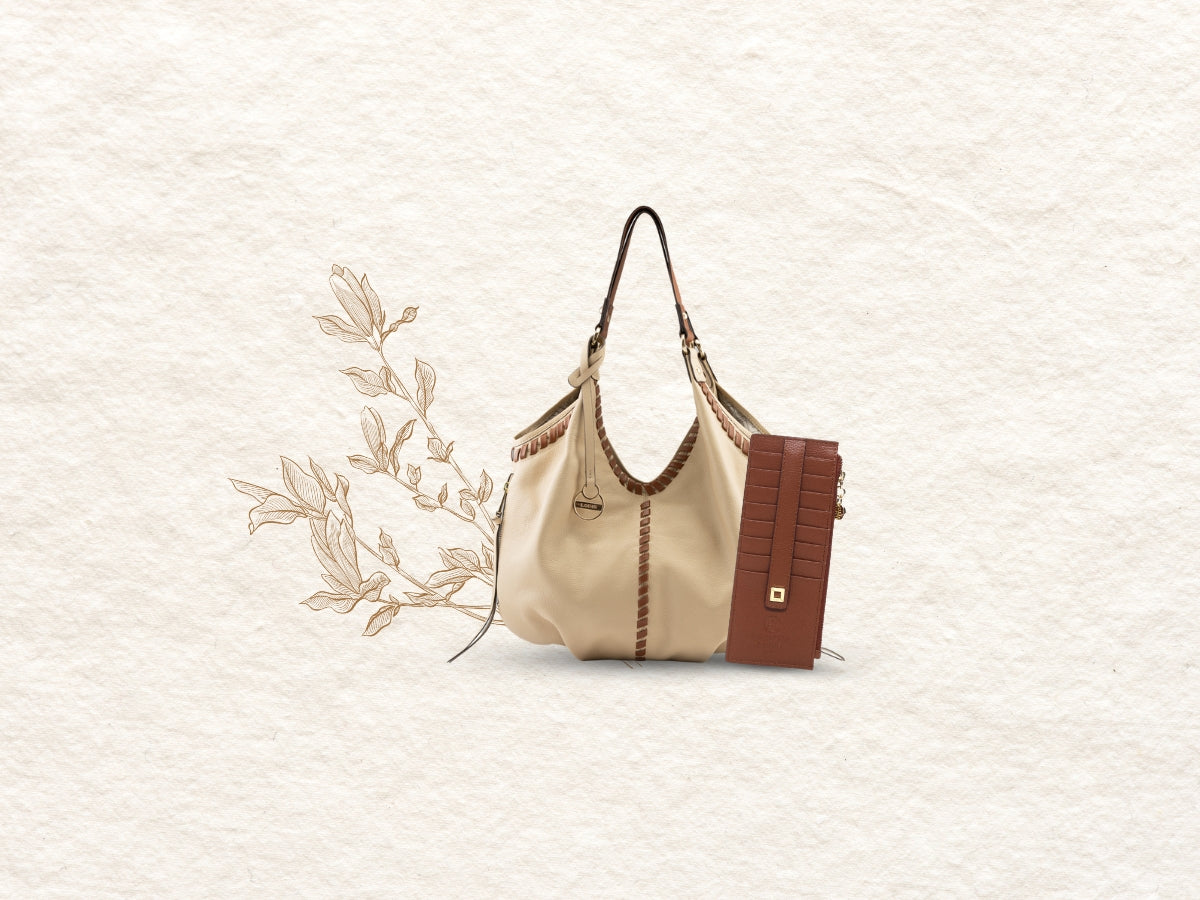
How To Match Your Leather Wallet With Your Handbag
Matching a wallet and handbag is more about coordination than an exact match. Focus on complementary colors and a size that fits comfortably inside your bag for an effortless, put-together look.
Think about the last time you switched handbags. Did your wallet come along without a second thought, or did you find yourself second-guessing whether it actually worked with the new bag? It's a small moment, but it says a lot about how we think about matching accessories.
The good news is that matching doesn't have to mean identical. It's really about finding pieces that feel intentional together, through color and proportion, rather than searching for an exact twin every time you shop. Once you know what to look for, pairing becomes second nature instead of something you second-guess in the store.
Lodis leather goods are built around this idea, with wallets and handbags designed to pair naturally across a range of combinations. This guide breaks down exactly how to put that into practice.
Do Your Wallet And Handbag Really Need To Match?
For a long time, the rule felt simple: buy your wallet and handbag as a matching set, ideally from the same line, same color, and same everything. It made shopping easier, but it also made your accessories feel a little one-note.
That rule has loosened. Today, coordination matters more than duplication. Your wallet doesn't need to be a twin of your handbag; it just needs to feel like it belongs in the same world. Two things do most of the work here: color and size. Get those broadly aligned, and everything else falls into place naturally.
Start With Color Coordination
Color does more heavy lifting than any other detail when it comes to pairing a wallet and handbag. It's the first thing your eye picks up on, before texture, before size, before anything else. The good news is you don't need a strict formula here. There are a couple of easy ways to approach it, and both can look equally polished depending on your personal style.
Neutral Colors
Pairing neutral tones on both pieces is the safest way to guarantee they work together, because there's very little room for the shades to clash. Something like the Lacey Tote Small in black next to the Julia Long Stacker in a similar dark neutral reads as one cohesive combination rather than two separate decisions. The bag sets the tone, and the wallet simply carries it through.
This works because neutrals share undertones more easily than brighter shades do. Black, chestnut, and similar grounded colors rarely compete with each other, so the pairing feels settled the moment you put the two together.
Vibrant Colors
A bolder pairing works differently. Instead of matching tone for tone, the goal is picking a wallet color that plays off the bag rather than blends into it. The Payton Crossbody in a rich, saturated shade paired with the Catalina Long Stacker in a complementary bold tone is a good example, since both pieces bring color to the table instead of one carrying it and the other staying quiet.
The trick with vibrant pairings is making sure the two colors feel like they belong to the same palette, even if they're not identical. A warm bold shade next to another warm bold shade will read as intentional; a warm shade next to a cool one is more likely to feel accidental.
Make Sure Your Wallet Fits The Bag
Fit is the practical side of matching, and it deserves just as much attention as color. A wallet needs to physically make sense inside your bag, not just look good sitting next to it. The right size keeps everything organized; the wrong one turns a good pairing into something frustrating to use.
Large Bags
Larger bags give you the most flexibility, which is why they can comfortably handle a wallet with more structure. The Amanda Work Tote offers enough interior space that pairing it with the Quinn Clutch Framed Wallet doesn't feel squeezed or overstuffed.
Mid-Size Bags
Mid-size bags need to balance everyday functionality with a smaller footprint. The Arielle Crossbody is a solid example, and a slimmer wallet like the Audrey Card Case fits naturally here, holding what you need without eating into space better reserved for your phone or keys.
Small Bags
Smaller bags require the most consideration, since even a little extra bulk throws off the look. The Ellie Satchel is compact by design, so it works best with an equally compact wallet like the Julia Slim Card Case, keeping things streamlined instead of overloaded.
Easy Wallet & Handbag Pairing Ideas
Sometimes it helps to see it all in one place. Here's a simple breakdown of pairings that balance color and proportion well.
| Handbag | Wallet | Why It Works |
| Lacey Tote | Julia Long Stacker | Neutral tones that pair effortlessly |
| Payton Crossbody | Catalina Long Stacker | Bold, complementary color combination |
| Amanda Work Tote | Quinn Clutch Framed Wallet | Roomy tote suits a fuller wallet |
| Arielle Crossbody | Audrey Card Case | Slim wallet fits a mid-size bag |
| Ellie Satchel | Julia Slim Card Case | Compact wallet for a compact bag |
Common Matching Mistakes To Avoid
A few small missteps can undo an otherwise good pairing. These are the ones to keep an eye on.
- Over-matching everything. Trying to coordinate your wallet with every other accessory you're wearing usually looks forced rather than intentional
- Ignoring proportion. A wallet that's too big or too small for the bag disrupts the whole pairing, even if the colors are spot on
- Buying on impulse. A wallet that looks great on its own can still clash with your existing bags if you haven't actually thought about how it'll pair before buying it
- Choosing looks over usability. A wallet should work as hard as it looks good. If it doesn't hold what you actually carry, the pairing isn't doing its job
Why Quality Leather Makes Matching Easier
Good leather does a lot of the work for you when it comes to matching. Genuine leather holds color consistently and develops a natural richness over time, which means the shade you buy today stays true and continues to look intentional as it ages.
That consistency makes it far easier to build a wardrobe of bags and wallets that pair well together, season after season, without worrying about colors fading unevenly or finishes wearing thin. Lodis has spent decades working with genuine leather for exactly this reason, so every piece is made to age gracefully and stay easy to coordinate for years to come.
Matching a wallet to your handbag was never meant to be complicated, and it doesn't have to be. Focus on color that feels coordinated and a size that actually fits your bag, and the rest tends to fall into place naturally.
Whether you lean toward a neutral pairing that works with everything or a bolder combination that adds a bit of personality, the goal stays the same: two pieces that feel like they were chosen with each other in mind, not just picked separately and hoped for the best.
Lodis has spent decades designing wallets and handbags with exactly this kind of everyday coordination in mind, using genuine leather that ages well and holds color consistently over time. That makes building a cohesive, easy-to-pair collection far simpler than it might seem at first.
Frequently Asked Questions
Q1. Should your wallet match your handbag exactly?
Not really. A few decades ago that was the rule, but these days coordination matters more. Stick to similar tones or complementary shades, and your pairing will look just as put together, without needing an identical set.
Q2. Can I carry a black wallet with a brown handbag?
Yes, and it works better than people expect. Black and brown are both neutrals, so as long as the tones aren't fighting each other, like a warm brown against a cool-toned black, the pairing usually reads as intentional rather than mismatched.
Q3. What size wallet works best with a small handbag?
Go slim. A compact bag doesn't have room for a bulky wallet, so something like a card case or slim wallet keeps the proportions right. Anything larger tends to overstuff the bag and makes it harder to close properly.
Q4. How do I choose a wallet for a large tote bag?
Totes have room to spare, so this is where a fuller wallet actually makes sense. Something with more compartments and a bit more structure, rather than a slim card case, fills the space properly instead of getting lost inside.
Q5. How many wallets should I actually own?
There's no magic number, but two or three covers most people. One neutral option for everyday use, and maybe one bolder colour for bags where you want a bit more personality. More than that usually just sits unused in a drawer.


Leave a comment
This site is protected by hCaptcha and the hCaptcha Privacy Policy and Terms of Service apply.