

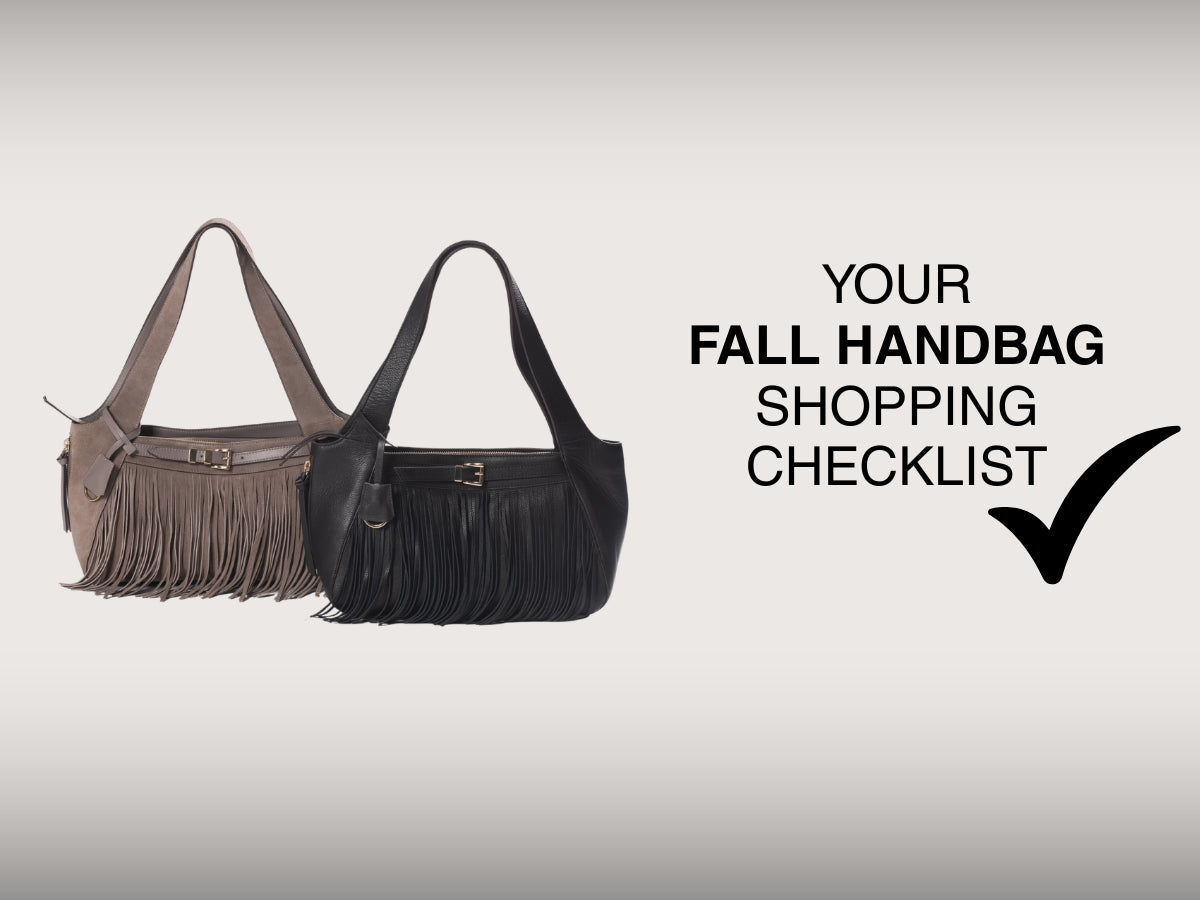
Your Fall Handbag Shopping Checklist: 10 Things to Look For
What should a fall handbag shopping checklist include? Color, leather quality, size, interior, hardware, straps, comfort, construction, versatility, and cost per wear. Run through all ten before you buy a bag that suits your wardrobe.
Fall has a way of exposing your handbag. The lighter colors that worked all summer suddenly look out of place next to wool coats and heavier knits, and the bag that held a phone and a lip balm now has to handle a scarf, a charger, and whatever else the cooler months add to your day.
That is why it pays to shop with a plan instead of just grabbing whatever looks good in the moment. A handbag that photographs well can still be the wrong size, awkward to carry, or built in a way that won't last past the first few weeks of daily use.
Lodis has been a genuine leather handbag brand since 1965, and the questions that matter most when choosing a bag tend to be simple ones. Does it work with what you wear, fit what you carry, and still feel like a good call a year from now?
The ten checks below cover all of it, from color and leather to comfort and cost per wear, so you can choose with confidence.
1. Choose A Color That Works With Your Fall Wardrobe
Color is the first thing you notice about a bag, so it's worth getting right before anything else. Fall shades like rust, olivine, chestnut, and brown sit comfortably next to denim, camel coats, and chunky knits, while black and fog make quieter backups.
The easiest way to choose is to think of the three colors you wear most in fall. Your handbag should work with at least two of them. A bag that only suits one outfit tends to get carried once and forgotten.
A structured satchel in rust or olivine, like the Astryn Satchel ($129.99), adds a seasonal color without competing with the rest of your wardrobe.

2. Check The Leather & Overall Material Quality
A handbag gets handled constantly. It gets tossed on car seats, hung on chair backs, and packed full on busy days, so the material has to hold up to all of it.
That's where genuine leather earns its reputation. Over time it softens and develops a lived-in look, while many synthetic finishes lose their appearance sooner. When you're shopping, check how the leather feels and looks: an even finish, a surface that isn't stiff or plasticky, and edges that are cleanly done.
Still, good leather isn't the whole answer. A well-built bag also depends on careful cutting, stitching, and finishing, so treat the material as the starting point and the construction as the proof.
3. Make Sure The Size Matches How You Actually Carry Your Bag
Here's an easy test: Lay out everything you carry on a normal fall day. Phone, wallet, keys, lip balm, and probably a few extras that sneak in once the weather turns, like sunglasses, a charger, or a small umbrella. As per a 2015 survey, 85 percent of women said their bag was just as heavy or heavier than before smartphones came along.
That pile tells you more than any size label. If it's mostly small essentials, a compact bag will do. If you're adding a tablet or a laptop, you need something with real room. And if you're somewhere in the middle, a medium bag usually hits the sweet spot, because it holds the basics without becoming a burden by lunchtime.
The Ceres Medium Tote in black or fog ($149.99) is a roomy everyday pick for that in-between carry.

4. Look At The Interior, Not Just The Exterior
A beautiful outside means very little if the inside is one big open space. Without any structure, your keys sink to the bottom, your phone disappears, and every grab turns into a search.
Take a look inside before you decide. Are there pockets for the things you reach for most, like a phone or keys? Is there a zip pocket for anything you'd rather keep secure? Does the lining feel solid and easy to wipe down, and can you see into the bag without digging?
Fall makes this matter more. Sunglasses, a scarf, a charger, and a lip balm all want a home, and a bag that organizes them saves you a lot of daily fumbling.
An organized interior makes a handbag easier to live with every single day.
5. Pay Attention To The Hardware & Details
Ask anyone who has retired a favorite bag, and the reason is often small. A zipper that sticks, a clasp that won't stay shut, and a ring that started to loosen. The leather is fine, but the details let it down.
That's why hardware is worth a hands-on check. Run each zipper from end to end. Close every clasp and buckle. Adjust the straps and give the rings and handle attachments a light tug. The metal should look evenly finished and feel solid, not light or rough at the edges.
These details shape both the look and the lifespan of a bag. Good hardware should feel like a quiet part of the bag, one you never have to think about.
6. Check the Handles and Strap Options
The same bag can look quite different depending on how you carry it. Hold it by the top handle, and it reads "polished and put-together." Slip it on your shoulder, and it feels easy and relaxed. Wear it crossbody, and it turns into a hands-free everyday bag.
That range is worth paying attention to when you shop. A bag with more than one way to carry it works for more outfits and more situations, which means you'll use it more often.
When you're comparing styles, check how the strap or handle feels, how it sits, and how many ways you could wear it on a typical fall day. The Amara Top Handle Tote ($149.99) leans structured, and the Lumos Texas Crossbody ($89.99) leans easy.

7. Think About Comfort Before You Buy
A bag can look perfect online and become your least favorite purchase after thirty minutes on your shoulder. Comfort rarely shows up in photos, so it's worth testing in person if you can.
Pay attention to how the straps or handles feel in your hand and on your shoulder. Notice how the bag hangs on your body and how it feels once it's loaded with your usual things. A bag that's fine empty can feel very different when full.
A soft, slouchy shape with dual shoulder handles, like the Zaria Hobo ($119.99), is easy to settle on your shoulder.

8. Inspect the Stitching and Construction
Stitching tells you more about a bag than almost any other detail. Look closely along the seams. The stitches should sit evenly, run in straight lines, and stay tight, with no loose threads or skipped spots.
Then check the places where the bag takes the most strain. Handles, strap attachments, and corners should feel secure, with extra reinforcement if possible. Edges should look clean and finished, and the bag should look balanced from every side, with nothing crooked or lopsided.
These details matter most if you want a long-lasting bag, because careful construction is what keeps a good material looking good over time. A structured tote with dual long top handles and metal feet on the base, like the Vintage Burnished Shoulder ($119.99), is built to sit upright and hold its shape.

9. Ask How Versatile the Bag Really Is
Be honest about how often you'd use it. A handbag only pays off when it leaves the closet, and the bags that do tend to be the ones that work with a lot of different outfits.
Think through your usual fall rotation: a cozy sweater and jeans on a weekend, something sharper for the office, and a dress for dinner. A bag that holds its own across all of those will get far more use than one that suits a single look. The same goes for what's inside it, so this guide to purse essentials can help you decide what a bag should hold day to day.
How often you'll carry a bag matters more than how good it looks on the shelf.
10. Consider the Price, Value, and Cost Per Wear
Price tells you what you pay once. Value tells you what you get back over time. They aren't the same, and a handbag purchase works best when you think about both.
Here's the quick math. Divide what a bag costs by how many times you expect to carry it. A $60 bag used five times costs $12 per wear. A $120 bag carried 120 times costs $1 per wear, and it's the one you'd still be reaching for months later.
Of course, that only works if the bag holds up. Material, construction, and versatility all feed into how long a bag stays in your rotation, so they belong in the calculation too.
A Quick Fall Handbag Shopping Checklist
Short on time? Run through these ten questions before you buy.
- Does the color work with my fall wardrobe?
- Is the leather durable and well made?
- Is the size right for what I carry every day?
- Does the interior keep things organized?
- Do the zippers and hardware feel sturdy?
- Does the handle or strap suit how I like to carry it?
- Will it stay comfortable when it's full?
- Is the stitching even and the construction solid?
- Does it work with more than one kind of outfit?
- Does the price make sense for how often I'll use it?
If you can say yes to most of these, the bag is worth a closer look.
In the end, shopping for a fall handbag doesn't have to be guesswork. Once you know what to look for, the decision gets a lot easier and a lot less likely to end with a bag sitting by the door by December.
Think back through the list. A color that suits your coats and knits, leather that feels well made, a size that holds your daily things, handles that sit comfortably, and a price that makes sense for how often you'll carry it. None of that is complicated, but it adds up to a bag you'll actually enjoy using.
Take this checklist along when you explore Lodis' Fall 2026 collection. Lodis has been crafting genuine leather handbags since 1965, and a bag that passes these ten checks is one you'll likely carry well beyond this season.
Frequently Asked Questions
Q1. What should I look for when buying a fall handbag?
Look for a color that suits your fall outfits, durable leather, a size that fits your essentials, a useful interior, sturdy hardware, comfortable straps, and solid construction.
Q2. What are the best colors for a fall handbag?
Rust, olivine, chestnut, brown, and saddle suit the season, while black and fog work as easy neutrals. Choose a shade that pairs with at least two outfits you wear most.
Q3. Is genuine leather good for an everyday handbag?
Yes. Genuine leather is durable, softens with regular use, and develops character over time. Good construction and sturdy hardware matter too, so check the stitching and finish before you buy.
Q4. How do I know if a leather handbag is good quality?
Check that the leather feels substantial, the finish is even, and the stitching is tidy. Zippers should glide, hardware should feel secure, and handles should be firmly attached.
Q5. How many handbags do I need for fall?
One well-chosen everyday bag can cover most of fall. Add a second for dressier plans or a different carry style if your routine calls for it.


Leave a comment
This site is protected by hCaptcha and the hCaptcha Privacy Policy and Terms of Service apply.