



RFID Wallets Explained: What They Are & Why They're Worth It
RFID stands for Radio Frequency Identification - the tech behind tap-to-pay cards. RFID-blocking wallets shield those signals, adding a layer of protection against rare but possible unauthorized scans.
Chances are you've tapped a card to pay for coffee, hopped on a train, or badged into work this week without a second thought. That quiet convenience is RFID technology at work, and it's become so common that most people don't realize how many cards in their wallet actually rely on it.
Lately, though, "RFID protection" has become a common label on wallets - sometimes explained clearly, often not. A quick search turns up plenty of alarming claims about card theft, alongside just as many brands quietly listing RFID protection as a checkbox feature without saying much about it at all. Neither extreme is particularly helpful if you're just trying to figure out whether it matters.
Here's a straightforward, no-drama look at what RFID protection actually does, how the technology works day to day, and whether it belongs on your wallet-buying checklist.
What Is RFID?
RFID stands for Radio Frequency Identification, a technology that lets a chip communicate wirelessly with a compatible reader using radio waves. Inside an RFID-enabled card, a tiny embedded chip and antenna work together - no battery, no charging, and no visible technology at all. When the chip comes within range of a reader, it transmits a signal that the reader picks up and processes.
This isn't new or experimental technology. It's been part of everyday life for years, quietly built into things people use constantly:
- Contactless credit and debit cards
- Hotel key cards
- Transit and metro cards
- Office access badges
- Some newer passports
If you've ever tapped a card instead of inserting it or waved a badge at a door instead of swiping it, you've used RFID - likely without realizing that's what it was called.

What Is RFID Skimming?
RFID skimming refers to the theoretical possibility of someone using specialized equipment to read an RFID-enabled card without physically touching it or the wallet it's in. It sounds alarming out of context, so it's worth adding some perspective.
In practice, RFID skimming is rare. It requires specific equipment, close physical proximity to the card, and favorable conditions that rarely align in everyday situations like a crowded street or subway platform. It isn't the common, everyday crime that some headlines suggest. Card issuers have also added their own security layers over the years, including encryption and transaction limits, which further reduce the practical risk.
That said, "rare" doesn't mean "impossible." This is where RFID-blocking wallets come in; not as a defense against a widespread threat, but as a simple, low-effort layer of protection for a risk that, while uncommon, isn't zero either.
How Do RFID Blocking Wallets Work?
The idea behind RFID-blocking wallets is fairly simple: a thin shielding layer, usually made from a metallic mesh, conductive fabric, or aluminum lining, is built into the interior of the wallet. That layer acts as a barrier, disrupting the radio signals a scanner would need to communicate with your cards.
Picture it as a protective pocket. As long as your cards are inside a closed RFID-blocking wallet, that barrier surrounds them, and a nearby reader simply can't make a connection.
There's nothing to turn on or maintain; the protection is passive and built into the material itself. It works every time the wallet is closed and stops the moment you remove a card to use it, which is exactly when you'd want it to.

Lodis Wallets: Protection Built Into Every Style
This is where Lodis stands apart: every wallet and card case in the collection includes built-in RFID-blocking technology, regardless of style, size, or price point. It isn't a limited-edition feature; it's simply part of how each piece is made.
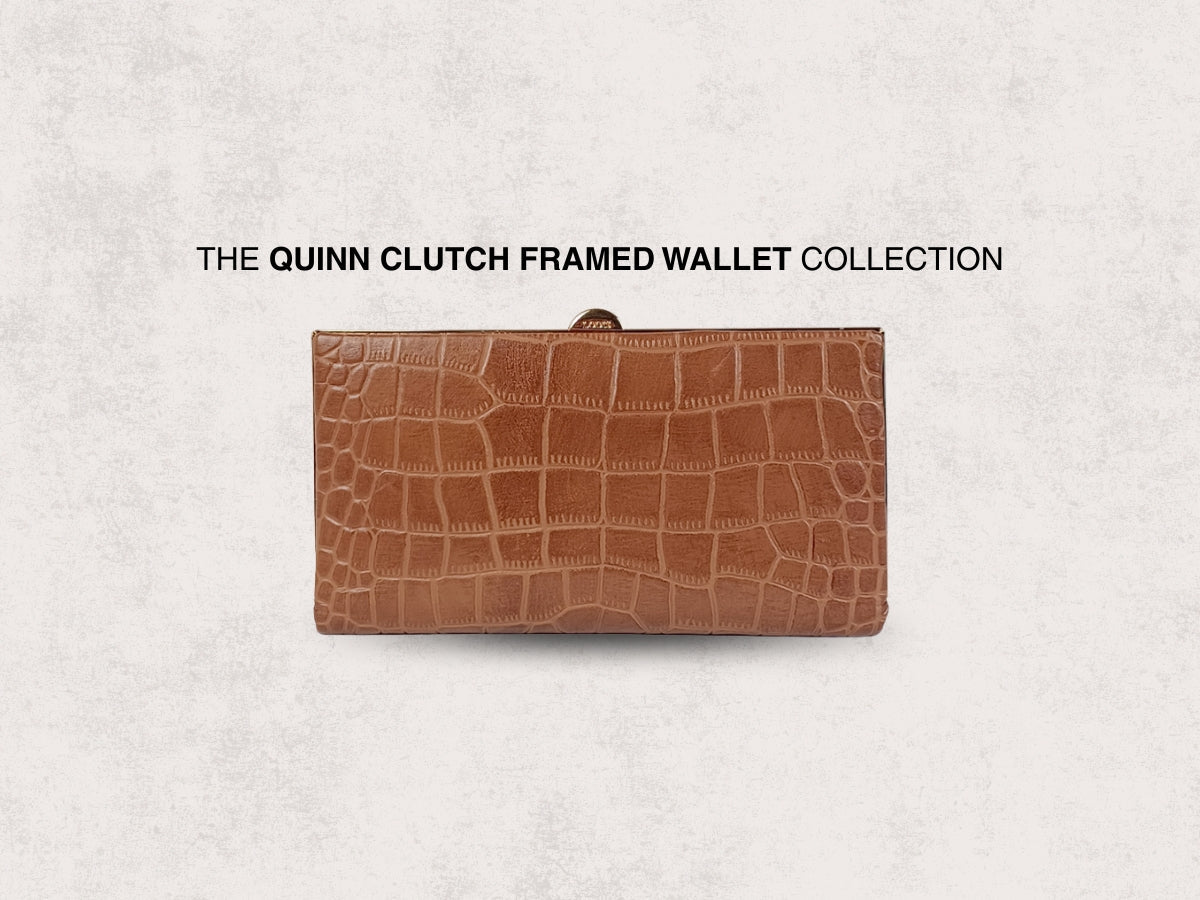
A few examples make the range clear. The Audrey Slim Card Case and Kiara Envelope Card Wallet cover the minimalist end. The Catalina Long Stacker and Julia Long Stacker suit anyone who wants more room to organize cards and cash. And for something dressier, the Quinn Clutch Framed Wallet carries the same protection in a clutch-style silhouette.
It's a quiet detail, but a meaningful one: genuine leather craftsmanship, thoughtful organization, and RFID protection, included as a baseline rather than an afterthought.
What Sets Lodis RFID Wallets Apart
Claims are easy to make; numbers are harder to argue with. Here's a specific look at how Lodis stacks up against the typical approach to RFID protection.
| Lodis | Others | |
| RFID Coverage | Entire Collection | Selected Styles Only |
| Leather Quality | Genuine, Throughout | Varies By SKU |
| Pricing | Standard, No Upcharge | Often Premium-Priced |
| Style Options | 40+ | Handful |
|
Ease Of Finding |
Immediate - No Filtering | Requires Searching |
Do You Actually Need An RFID Wallet?
Not everyone needs to worry about RFID skimming to the same degree, but there are situations where an RFID-blocking wallet makes more practical sense. You may benefit from one if you:
- Travel frequently, especially internationally
- Use public transit on a regular basis
- Carry multiple contactless cards at once
- Commute through crowded stations or terminals daily
- Spend time in high-traffic tourist areas
- Simply prefer having one less thing to think about
If several of these sound familiar, an RFID wallet is a reasonable, low-effort addition to your everyday carry. And even if none of them apply directly, it's worth remembering that most payment cards issued today are contactless by default, which makes RFID protection less of a niche feature and more of a practical, future-proof standard.
At the end of the day, RFID protection is a small, practical feature rather than a dramatic one. It doesn't guard against a common threat, but it does offer peace of mind for a risk that, while rare, isn't zero.
That's the same principle Lodis has built around since 1965: genuine leather craftsmanship paired with practical, everyday design without unnecessary upselling. RFID-blocking technology fits naturally into that approach: included across every wallet and card case, regardless of style or price point.
So whether you're after a slim card case or a full-size organizer, the decision comes down to what actually suits how you carry your essentials; the protection is already part of the equation.
Frequently Asked Questions
Q1. Do RFID wallets actually work?
Absolutely. The shielding layer inside blocks the radio signal a scanner needs to read your card, so as long as your card's tucked inside, there's nothing for a reader to pick up.
Q2. Does RFID blocking wear out over time?
Not really. The shielding is a passive material, not a battery or electronic part, so there's nothing to "run out." As long as the lining stays intact, it keeps doing its job for the life of the wallet.
Q3. Are RFID wallets bulkier than regular ones?
Not with good craftsmanship. Early versions were a bit thicker, but most wallets today - Lodis included - build the shielding into slim, everyday designs without adding noticeable bulk.
Q4. Do I need RFID protection if I don't travel much?
It's less about travel and more about habits. If you carry contactless cards day to day, which most people do now, the protection is quietly working in the background either way; travel just makes it a bit more relevant.
Q5. Do Lodis wallets come with RFID protection built in?
Yes. Every Lodis wallet and card case includes it standard, not as an add-on or a separate line. Whether you go with a slim card case or a full wallet, the protection's already there.


Leave a comment
This site is protected by hCaptcha and the hCaptcha Privacy Policy and Terms of Service apply.